

connected

The Radical Act of Letting Your Needs Count

You’ve heard it before: put your oxygen mask on first.
It can sound trite… until you’re the one running on empty.

The oxygen mask metaphor exists for a reason.

When parents’ needs are ignored, everything feels harder. When parents are supported, life feels more breathable. This retreat is designed to help you feel seen, cared for, and resourced so you can return home steadier and more connected. Come experience what it’s like when your needs are part of the plan.

The Still Us Valentine’s Retreat is an invitation to pause, breathe, and remember that your needs aren’t extra. They’re essential. Come feel what it’s like to be held, guided, and reminded that you matter.

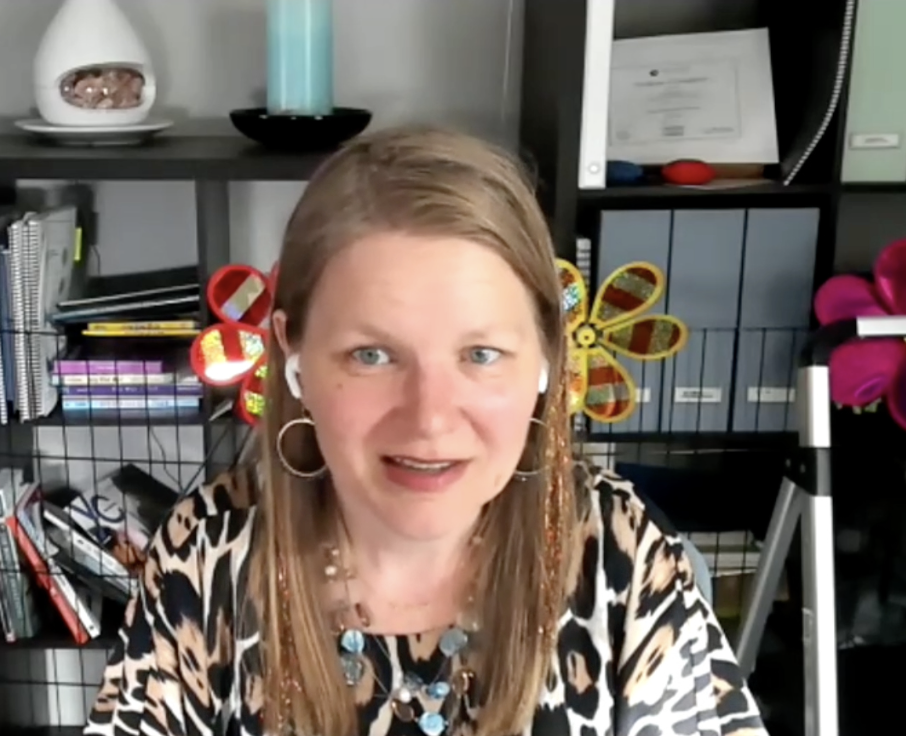
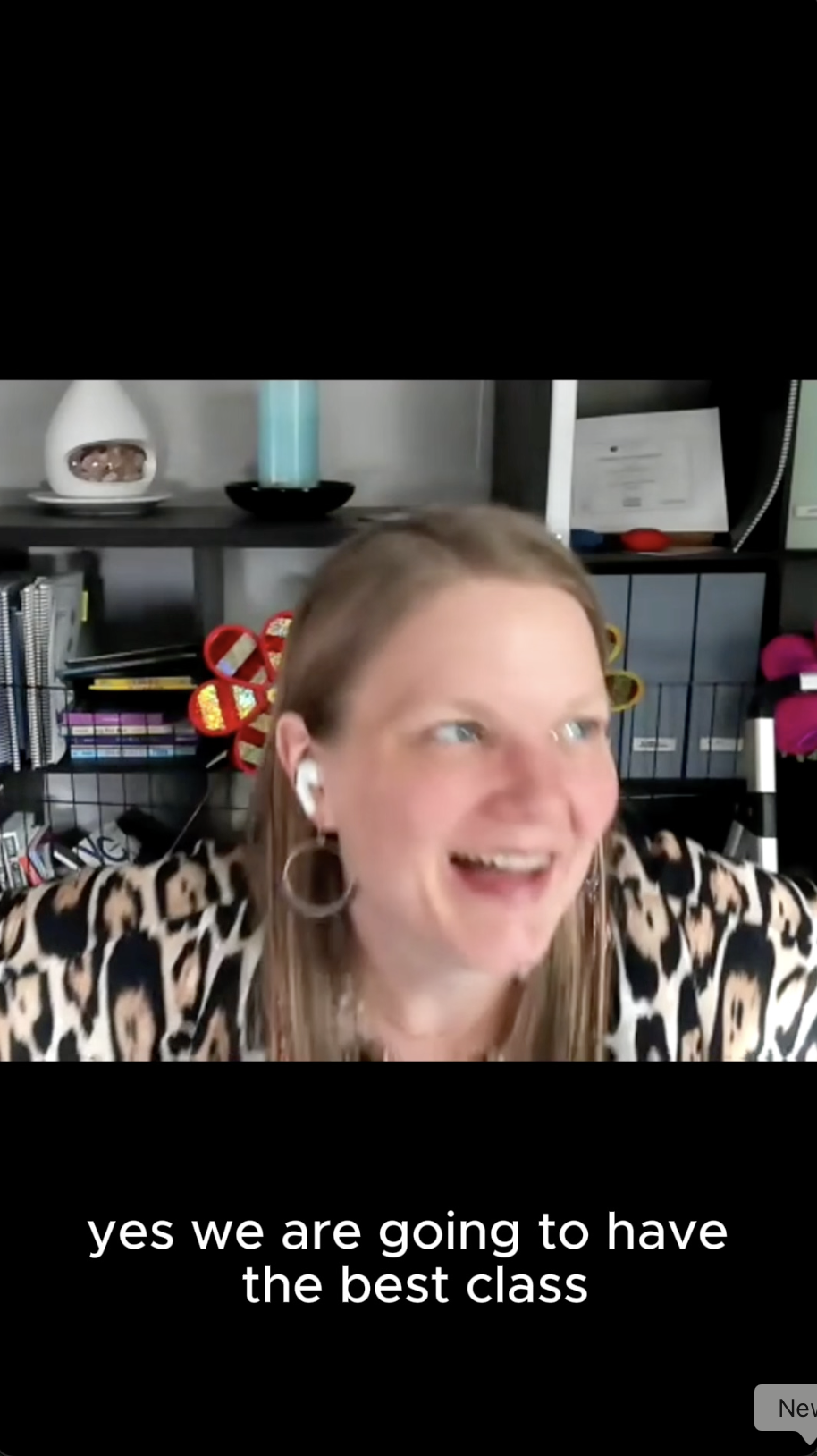
(Video from a coaching session between somatics coach Stasia Savasuk and Lara Elfstrand)

Ten Years In, and Still Working: The Quiet Power of Family Routines

Ten years into teaching the Gottman Bringing Baby Home® program, and this part still amazes me.

The couples who practice these skills don’t just communicate better. They build routines that make their homes feel warmer, calmer, and more supportive. Not perfect. Not rigid. Just steady enough to hold real life.

That’s exactly what we’ll be exploring at the Still Us Valentine’s Retreat. A space for couples with babies, diapers, and night wakings to reconnect, reset, and remember that your relationship matters too.

If you want tools that last long after the chocolate is gone, this retreat was made for you. ❤️

An excerpt from a recent coaching call between Lara Elfstrand, founder of Little Elf Family Services, and Stasia Savasuk, somatics coach.

Register now

Still Us: Come for the Warmth. Leave With What Actually Helps.

A moment from my recent coaching call with my somatics coach, Stasia Savasuk

We’re building something soft and strong here.
A space where you laugh, reconnect, and leave with routines that actually fit real life.

If you’ve been craving warmth, connection, and tools you’ll still be using months from now…
This is your nudge. 💛
Come join us. We saved you a seat.

register now

More Than Survival Mode: A Valentine’s Retreat for Real Connection

💛 Still Us: A Valentine’s Retreat for Couples with Diapers & Night Wakings 💛
(also known as: Our Needs Matter)

When you have young kids, it’s so easy for everything to revolve around them.
They’re wonderful. They’re needy. And somewhere along the way… you get lost.

This retreat is a pause button.
A chance to remember that your relationship matters too.

✨ Time to talk about what you want for your family
✨ Simple, doable routines that bring warmth back into daily life
✨ Tools for handling conflict with more care and less wear-and-tear
✨ Tiny rituals that add up: kisses hello and goodbye, a daily dance, intentional touch
✨ A shared vision, so it’s not all on one partner

You don’t have to be struggling to come.
You can be doing really well and still want more connection, more ease, more “we’ve got each other.”

When parents feel supported by each other, kids feel it too.
This is about building a relationship that becomes a place of rest in a noisy, demanding world.

If your nervous system feels… tired 😮‍💨
This space is for you.

I’d love to see you there. 💛

Limited scholarships are available. Babies in arms are welcome to attend.

Related Content

Teamwork, Not Turfwars: Understanding Gatekeeping in Parenting

Celebrating Joy and Connection: A Father-Son Moment to Make You Smile

One of My Why’s: The Piña Colada Song

What to Expect at a Gottman Bringing Baby Home class at Little Elf Family Services (this will be the basis of the retreat)

Imagine a World Focused on Strengths, Playful Learning, and Empowered Parents

The #1 Secret to Healthy Relationships

Guiding Families toward Rest, Connection, and Joy

This video is also available on social media:

- on Facebook: https://www.facebook.com/1394469478/videos/897194853260062/

- on Instagram @chica.and.charlie at https://www.instagram.com/reel/DTyOfZckiYY/?utm_source=ig_web_copy_link&igsh=MzRlODBiNWFlZA==

- on LinkedIn at https://www.linkedin.com/posts/laraelfstrand_still-us-a-valentines-retreat-for-couples-activity-7419841949299433472-D4Hh?utm_source=share&utm_medium=member_desktop&rcm=ACoAAAKXkgQBsXgLqBSKrt5zRdqp5oQlyHm6zis

Register now

The world feels heavy. Here’s how parenting becomes an act of hope.

The world feels heavy. Here’s how parenting becomes an act of hope.

The world feels heavy. Here’s how parenting becomes an act of hope.

When the world feels loud, heavy, and overwhelming, I remind myself of this:

The work that matters most is often small, slow, and close to home.


Raising children who know how to pause, repair, take turns, express needs, and stay curious is not separate from creating a more just and humane world. It’s part of it.


This February, I’m offering a Valentine’s retreat for families in pregnancy, postpartum, or with children up to age 5 in the greater Sacramento area.


We’ll focus on how to model respect, regulation, playfulness, and connection so our kids can grow up being light in complicated times.


Raising grounded, compassionate kids is not a small thing. It’s world-shaping work.


If this resonates, I’d love to have you with us. 🤍

Learn more

Explaining Scary Things Like Mr. Rogers: A Halloween Reflection

Explaining Scary Things Like Mr. Rogers: A Halloween Reflection

If you’ve been following me for a while, you know that we have adopted a rescue dog, Charlie, who often has had anxious behaviors. For a long time now, I’ve been wanting to write a blog post about what one of our dog trainers called “the Mr. Rogers hack.” She suggested that we talk to Charlie about scary things by using simple language to talk honestly about what is happening, imitating the style of Mr. Rogers.

It seems particularly appropriate to write this post on Halloween, because one example of this hack is that in 1975, Mr. Rogers invited Margaret Hamilton (who played the Wicked Witch of the West in the Wizard of Oz) to his show so that she could show children her costume.

As I was thinking about the Mr. Rogers hack and about Halloween, I asked Google: explain scary things in the style of Mr. Rogers. I found the answer helpful:

————

To explain scary things in the style of Mr. Rogers, the approach involves gentle honesty, affirmation of feelings, and focusing on helpfulness and safety. He understood that children's fantasies could be far worse than reality, so his goal was to provide clear, simple, and reassuring explanations to prevent confusion and fear.

Here is how he would likely explain three common fears:

Celebrating Joy and Connection: A Heartwarming Father-Son Moment to Make You Smile

My words this year are celebration, self compassion, and guts. And this week in particular I’m working on savoring the celebrations. That has just brought to mind a lot of fun stuff. One of them is this video of a father and son watching TV together and talking about what they see. This video just makes me smile. It’s a celebration of fathers. It’s a celebration of parents. It’s amazing communication. And it just brings a smile to my face every time I watch it. I hope it does that for you, too. Go check it out for a good smile.

Related Content

For another opportunity to smile, check out my Valentine’s Day treat! Even when it isn’t Valentine’s Day, this makes my heart happy!

More Than Survival Mode: A Valentine’s Retreat for Real Connection

Tense, Release, Repeat: A Playful Guide to Kids’ Relaxation

Tense, Release, Repeat: A Playful Guide to Kids’ Relaxation

Progressive muscle relaxation isn’t just for adults—it can be a playful and powerful way to help kids manage stress, too. By turning relaxation into games—like blowing bubbles with slow breaths, dancing like stiff robots and floppy noodles, or squeezing toes in the mud—we can teach children how to notice the difference between tension and calm. The best part? When parents join in, kids don’t just learn the skill—they feel the calm spread through the whole family.

Teamwork, Not Turf Wars: Understanding Gatekeeping in Parenting

Teamwork, Not Turf Wars: Understanding Gatekeeping in Parenting

Everyone who cares deeply about a baby is in competition for that baby. Gatekeeping is normal—and it’s really hard. But when we recognize it, we can shift from competing with one another to working together as a team.

One of my "Why's": The Piña Colada song

One of my "Why's": The Piña Colada song

When I think about songs that remind me of why I do what I do, one of the top songs that comes to mind is “Escape (The Piña Colada Song)” by Rupert Holmes. It’s an oldie but a goodie. :)

If you haven’t heard it in a while, click on the link above and give it a listen. Then come back and check out why this song is so important to me. And I bet that you’ll be singing along as you read, just like I am doing as I write!

My Name Isn’t Laura: What Mistakes Can Teach Us

My Name Isn’t Laura: What Mistakes Can Teach Us

A couple of days ago, I created a “Welcome to Little Elf Family Services” video. I thought it turned out decently well, and I posted it. I watched part of the captions and changed the spelling of “mountain cur” but only realized after I had posted the automated captions that they misspelled my name.

My name is Lara. It isn’t Laura. It’s like the state in Venezuela, like Superman’s mother, like Lara Croft, or Lara in the movie Dr. Zhivago (which is where it really comes from, although I honestly don’t know the story all that well).

So that got me thinking about mistakes. Mistakes are hard. They are challenging. And the way that we handle them matters.

Welcome to Little Elf Family Services!

Welcome to Little Elf Family Services!

Welcome to Little Elf Family Services! I’m Lara Elfstrand. I am a parent coach, and I am here to help parents to feel connected, rested, and thriving. I have a master’s degree in early childhood special education (and a clear teaching credential), and I am endorsed as an infant family advanced transdisciplinary mental health practitioner. I love to learn, and I have experience and education in sleep from the Palm Institute, in relationships from the Gottman Institute, and in attachment from Circle of Security. If you would like to feel more connected, rested, and thriving in your family, click the button below to schedule a free chat.

schedule now

Tired & Stressed? These Simple Habits Will Change Your Life

Tired & Stressed? These Simple Habits Will Change Your Life

Routines have been a fundamental part of my life since I got married (25 years ago!) and especially during times when I’ve had a young child and/or a dog at home (the last 16+ years). Here are some of my favorite sources of my favorite routines. The challenging part is to not try to do them all at once! Pick one or two to start with! Break things into small pieces, and if you need some support, reach out to me and let’s chat!

Guiding Families Toward Rest, Connection, and Joy

At Little Elf Family Services, I believe that parenting isn’t about perfection—it’s about connection. Families thrive when they feel supported, equipped, and empowered, and my work is designed to help parents move from exhaustion and frustration to confidence and joy.

As a sleep consultant, marriage and parenting coach, and early childhood special educator, I blend evidence-based strategies with compassionate support. My approach draws from experts like John & Julie Gottman, Bruce Perry, Stewart Brown, Brené Brown, and Dan Siegel, helping families find solutions that align with their values and unique needs.

A Calm & Connected Approach to Parenting

Parenting can feel overwhelming, but struggle and confrontation don’t have to be the norm. Clients often express relief when they realize they don’t have to panic over each new challenge. Instead, they learn to approach problems with a steady, thoughtful perspective, making small shifts that create lasting positive change.

“We knew we didn't need to panic when facing a new problem as you would be there, guiding us.”
“We’re also constantly amazed by how your parenting philosophy has minimized confrontation and struggle, and allowed us to focus on the happy and joyful moments that our child brings us.”

Empowering Families with Practical Tools

I provide resources, guidance, and encouragement—but the real magic happens when families take those tools and make them their own. My work isn’t about fixing families; it’s about helping them find their own strengths and rhythm.

"She won’t do the work for you—but she will give you resources, tools, and support to do it yourself. And she will be cheering you on every step of the way.”

Science-Backed Strategies for Real-Life Parenting

From gentle start-up conversations (a Gottman-based approach that reduces conflict) to completing stress cycles (so parents don’t carry frustration day after day), my work is rooted in strategies that make a real difference. Laughter, connection, and small, consistent changes help families shift from surviving to thriving.

"We are better parents, a better couple, and better people for knowing her and having worked with her."

Whether you’re navigating infant sleep, toddler emotions, or the ups and downs of parenting, my goal is to help you feel rested, connected, and confident—so you can focus on what truly matters: the joyful moments in family life.

**This post was created by ChatGPT to summarize my work and includes real testimonials from real people that I have served. I love it and it fits me beautifully, so I am sharing it here. 9/4/25 I am also adding links to blog posts on related topics.

Related Content

More Than Survival Mode: A Valentine’s Retreat for Real Connection

Breathing Techniques for Kids

Blowing bubbles is a great way to calm down and practice breathing!

Blow big bubbles to practice slow, calm breaths. Then see how you can blow many small bubbles when you breathe faster!

While we are on the topic of breathing, here are some other breathing strategies that I recommend to my clients often:

While researching for this blog post, I also found this cute puffer fish that goes up and down as you breathe and I kind of love it!

Also I love to remind parents that blowing bubbles is an awesome way to practice breathing! Blow big bubbles to practice slow, calm breaths. Then see how you can blow many small bubbles when you breathe faster! Can you blow bubbles with belly breathing? Just know that shaking bubbles or waving the wand inside of the bubble solution will make the solution get foamy and stop working.

Reminder: Why practice breathing with your kids? It builds calm. It tells the brain that they are safe, which can help them to think more clearly and make better decisions. It can help to reduce cortisol, which can be helpful as part of a pre-sleep routine to help prepare the body for rest and shut off from a busy day. It also helps with gut health, according to Dr. Elisa Song of the book Healthy Kids, Happy Kids.

April additions: One of the things I love to do is to use the things that kids already know and love and build on it! So recently I found:

Pokemon breathing!

Minecraft breathing!

Dinosaur breathing!

What would YOUR kids add to this list? Can you find some videos on YouTube? Share them with me!

Related Content

Spreading Calm: Lessons on Sleep Training from Charlie

The Importance of Mindfulness as a Parent

Calm Evenings Start with You—Reframe the Bedtime Routine for a Smoother Night!

50 Ways to Take a Break

Transitioning from Silly to Sleepy

The #1 secret to healthy relationships

Have you ever found yourself reacting in a way that you later regretted—criticizing or blaming a loved one, shutting down, or getting defensive? Understanding why this happens is key to building healthy relationships.

One of the most powerful tools for understanding our reactions comes from Dr. Dan Siegel’s hand model of the brain. This simple yet profound model helps us see why we sometimes lose control in moments of stress and how we can regain balance.

The Hand Model of the Brain

Hand model of the brain. This is Lara’s hand. The illustration is by Dr. Dan Siegel

Put your hand up in front of you. Your hand can serve as a simplified model of the brain:

  • Forearm: Represents the spinal cord, where information flows between the body and the brain.

  • Palm/Base of the Brain: Represents the brainstem, which regulates essential functions like heart rate and breathing.

  • Thumb (Folded into Palm): Represents the limbic system, the emotional center of the brain.

  • Fingers (Wrapped Over the Thumb): Represent the cortex, the thinking brain, which helps with reasoning, problem-solving, and self-control.

At the base of the brain, there’s a “gatekeeper” (the fancy word is neuroception) constantly asking, “Am I safe?” If the answer is yes, our thinking brain stays engaged, allowing us to respond thoughtfully. If the answer is no, our brain goes into fight-or-flight mode, and we “flip our lid”—losing access to clear thinking and reacting impulsively instead. To see this illustration explained by the creator, check out this video by Dr. Dan Siegel.

Why This Matters in Relationships

Before I learned about the hand model, I had heard of fight or flight, but I didn’t understand how it affected my relationships. Here’s a real-life example:

I was cooking dinner and grabbed a pan that had just been in the oven. Instantly, my brain didn’t wait for a careful decision—it reacted immediately, making me pull my hand away. This is an example of my brain protecting me in a moment of danger.

But here’s the problem: our brains don’t distinguish between physical danger (a hot pan) and emotional danger (a hurtful comment from a loved one). If someone I care about criticizes me, blames me, or says something that feels insulting, my brain reacts the same way—it flips the lid, and I lose access to my thinking brain. This is when we tend to use behaviors that damage relationships, like criticism, mockery, withdrawing from the interaction, or reacting defensively.

How to Prevent “Lid-Flipping Fests”

Photo by Mayur Gala on Unsplash.

  1. Recognize when your lid is flipping. Create a family culture where it’s safe to take a break to calm down before responding, and where trust is built by coming back to the discussion and continuing the discussion after you are calm.

  2. Take at least 20 minutes to calm both body and mind. It takes time for stress hormones to clear. But be mindful—if you spend that time ruminating on how unfair or frustrating the situation is, you won’t actually calm down. Instead, you can read a book, watch something that makes you laugh, or try a progressive muscle relaxation.

  3. Teach good behavior to your child before or after a tantrum. When a child’s lid is flipped, they literally can’t hear or process logic. Teach problem-solving skills when they’re calm.

  4. Focus on respect and clarity. When we stay calm, we can express our needs without criticism, sarcasm, or blame. This helps keep the conversation productive and prevents unnecessary hurt.

Understanding how our brain works in moments of stress allows us to respond instead of react. It’s a game-changer for strengthening relationships with our partners, children, and loved ones.

For a deeper dive, check out this video by Dr. Dan Siegel.

Want to learn more about the behaviors that predict relationship meltdowns? Watch this video of Dr. John Gottman on Anderson Cooper.

Want tips on how to express needs without criticism, sarcasm, or blame? Watch this video of Dr. Julie Gottman.


Related Content

More Than Survival Mode: A Valentine’s Retreat for Real Connection
Posts on Connection